Putting equity first

When so much about the world needs to shift, so urgently… here are a few places to start.

Listen: Educator, author, and leader Shawn Joseph shares his passion for social justice and discusses his work advocating for equity in education, shedding light on what he calls the “silent crisis” in literacy instruction.

Learn: Share Shawn Joseph’s discussion guide with your colleagues. Which insights are the most relevant to your district this year?

Lead: Take a look at this curated collection of multicultural and social justice books. Could one spark discussion for your students?

Lead: Share this infographic on the journey to freedom with your class. Ask students to select an event to research and present a two-minute video talk.

Leveraging the science of reading

Go deep on the insights and practices that will help our classrooms (remote or otherwise)–based on the latest science, and adaptable to every shift in the educational landscape.

Learn: Susan Lambert talks to Language Magazine about the science of reading and what it means right now.

Building strong foundational skills

Strong, systematic sound-first instruction is critical to helping students learn to decode and can increase student success. Learn how specific skills can increase your impact. 

Learn: Start with Emily Hanford’s “Hard Words” article.

Listen: Jasmine Lane on the importance of equity, and how early literacy teachers can make a difference.

Listen: Bruce McCandliss on the changes a child’s brain shows when learning to read

Lead: Challenge a colleague to this Scarborough’s Rope activity–work through a sample lesson from your district and point out elements of the reading rope.

Sharing knowledge resources

Students need to be able to both read words and get the meaning of what they’re reading. Find out how to help them build key background knowledge from the get-go, so that it compounds over time.

Learn: Begin with Why knowledge matters–then follow up with Natalie Wexler’s podcast

Learn: Take a look at Achieve the Core’s overview of the importance of building knowledge and the groundbreaking “baseball study

Listen: Anne Lucas on the importance of comprehension and the specific skills that can boost it.

Listen: Tim Shanahan on four crucial aspects in teaching reading and his views on teaching reading in middle school as an extension of evidence-based early literacy practices

Learn: Begin with Why knowledge matters–then follow up with Natalie Wexler’s podcast

Learn: Take a look at Achieve the Core’s overview of the importance of building knowledge and the groundbreaking “baseball study

Assessing what students need

Assessment this year is more important than ever before–and also more challenging. What does this extended summer slide look like? How can you find time to review what’s needed, while still moving forward?

Learn: Education for Global Development’s thoughts on formative assessment in the time of COVID-19.

Learn: District Administration on why educators want more data– and more guidance on how to use it

Learn: Catch up on dyslexia risk factors and state legislation with our dyslexia toolkit.

Listen: Nancy Nelson on the importance of universal screeners in literacy instruction.

Lead: What can you offer struggling readers and their caregivers? Take a look at the IDA’s COVID-19 Resource Guide.

Thriving through remote learning

Everything about this school year has changed–yet your work is more important than ever before. How can you support your students, and your colleagues, in this new normal? Stop by Amplify Anywhere for ideas that may help.

And while you’re here–please download your free PDF “20 Self-Care Tips for Educators Right Now” (and please take care of yourselves!).

Alana Mangham on Teaching Now

Natalie Wexler on the New Normal

Thinking about back-to-school

Though it feels like the landscape is changing every day, we know we’ve got to find a way to get students back to learning. What will your school day look like? What reinforcement might you need to do in order to ensure equity? We will continue to share resources to support your journey.

Learn: In this recorded webinar, explore some ways CARES Act funding might support your students.

Learn: Hear from Baltimore educator Lucas Drerup on making middle school ELA both enjoyable and rigorous for students.

Listen: Jackson-Madison CAO Jared Myracle shares his thoughts on change management and the science of reading.

Listen: Doug Lemov, managing director of Uncommon Schools, discusses the role of technology in the classroom and remote instruction, and how educators can reconsider how they approach literacy.

Lead: As you consider how and when to reopen, review this article from The Atlantic on Eight steps that will let us reopen schools.

Lead: Guidance from District Administration on reopening safely this fall.

Finding high-quality instructional materials

If you were already thinking about new literacy resources–you’ve now got even more ideas about what high quality looks like. How will your literacy program work for all students? How do you need your literacy resources to support you in the classroom, in remote learning, and for every scenario in between?

Learn: Review this guide to a high-quality curriculum adoption.  What factors matter most now, in literacy and in every subject?

Listen: Hear nationally recognized reading experts and authors David and Meredith Liben discuss evidence based solutions and more.

Lead: Download this K-8 ELA Instructional Materials Evaluation Guide. Share with your district leadership. What resources will you all need next year (and beyond) to do the best job possible for your students?

Lead: Talk to a few colleagues in the coming weeks. What are they seeing right now? What are they planning to improve next year?

Staying strong and staying connected!

Illustration for

Looking for ways to connect with other educators and stay updated on the latest research and trends in the science of reading? Check out a few more ways to do so below.

Science of Reading: The Podcast delivers the latest insights from researchers and practitioners in early reading. Further your professional development with each episode by subscribing and downloading them now.

Science of Reading: The Community is built for those committed to fostering conversation around the science of reading and implementing best practices in the classroom (including the virtual classroom).

Ready for more? Complete the form below to stay up-to-date on the latest resources.

Season 6, Episode 4

"Making Black Girls Count," with Dr. Nicole Joseph

Join us for a special episode of Math Teacher Lounge where we take a break from our focus on math fluency to talk with scholar and author Nicole M. Joseph, Ph.D. Tune in to this important conversation where Dr. Joseph shares her research and discusses how we can begin to uplift Black girls and empower them in our math classrooms.

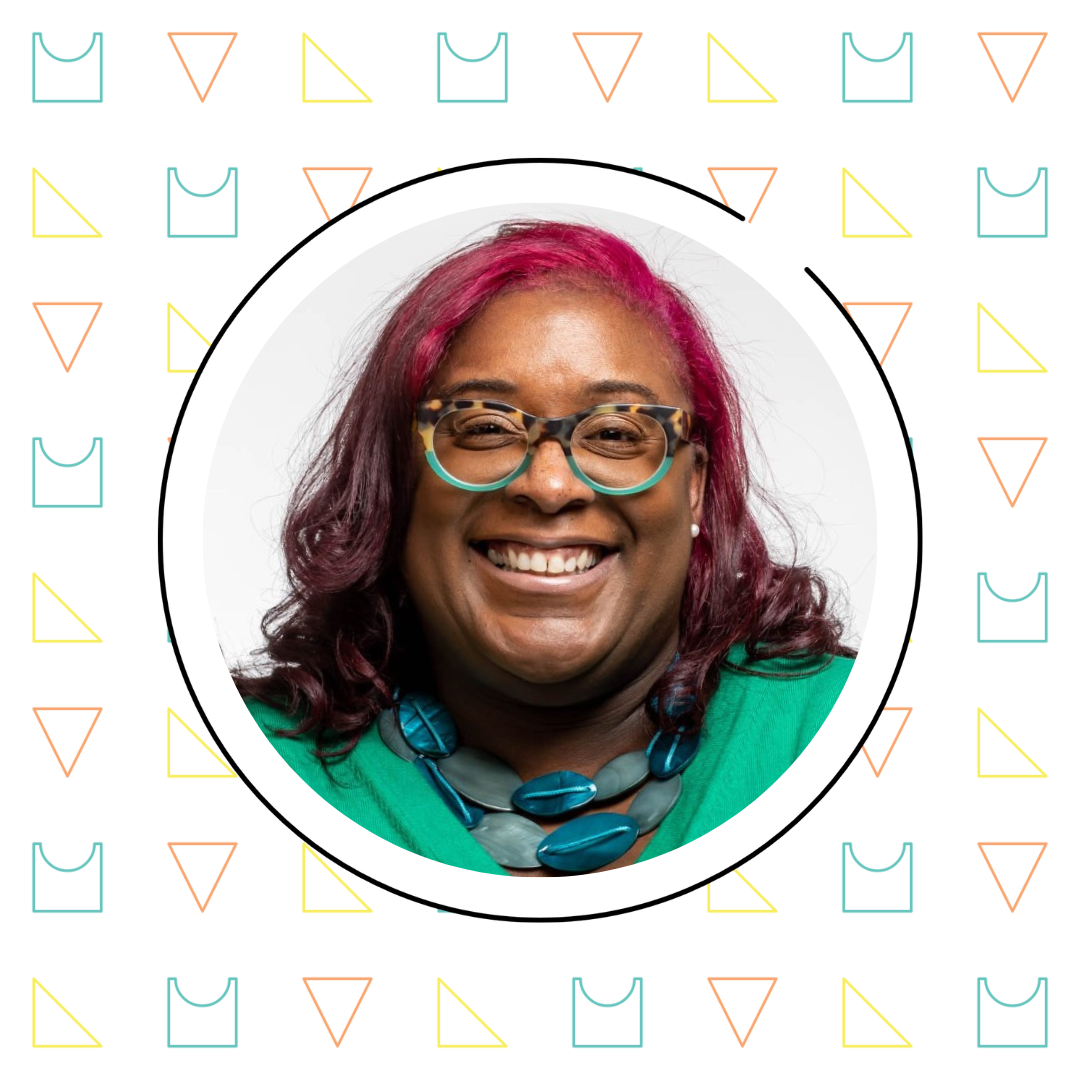
A smiling person with pink hair, glasses, and a green top is centered in a circular frame, against a white background with colorful geometric shapes.

Meet Our Guest(s):

A person with pink hair, glasses, and a green top smiles at the camera. An illustrated necklace and a blue shirt graphic overlay highlight their passion for math education.

Nicole M. Joseph, Ph.D.

Nicole M. Joseph is an associate professor with tenure of mathematics education in the department of Teaching and Learning at Vanderbilt University. She directs the Joseph Mathematics Education Research Lab (JMEL), and is the founder and director of Black Girls Becoming Summer Research Institute, a two-week residential program at Vanderbilt for rising 7th and 8th grade Black girls focused on a holistic STEAM curriculum.

Meet our hosts: Bethany Lockhart Johnson and Dan Meyer

Bethany Lockhart Johnson is an elementary school educator and author. Prior to serving as a multiple-subject teacher, she taught theater and dance, and now loves incorporating movement and creative play into her classroom. Bethany is committed to helping students find joy in discovering their identities as mathematicians. In addition to her role as a full-time classroom teacher, Bethany is a Student Achievement Partners California Core Advocate and is active in national and local mathematics organizations. Bethany is a member of the Illustrative Mathematics Elementary Curriculum Steering Committee and serves as a consultant, creating materials to support families during distance learning.

Dan Meyer taught high school math to students who didn’t like high school math. He has advocated for better math instruction on CNN, Good Morning America, Everyday With Rachel Ray, and TED.com. He earned his doctorate from Stanford University in math education and is currently the Dean of Research at Desmos, where he explores the future of math, technology, and learning. Dan has worked with teachers internationally and in all 50 United States and was named one of Tech & Learning’s 30 Leaders of the Future.

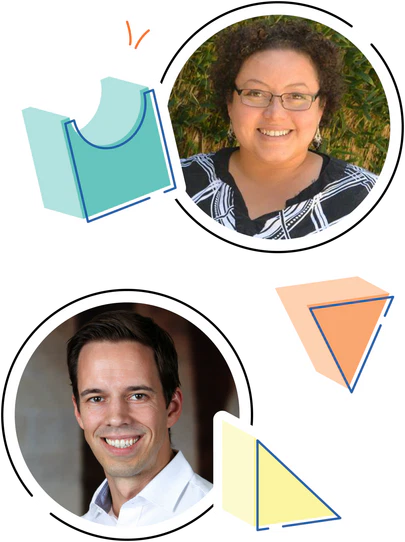
Two people smiling at the camera, each in a separate circular frame, with geometric shapes decorating the background—perfect for a math teacher lounge or highlighting fresh math teacher resources.

Quotes

"I think there has to be a level of humility and vulnerability by teachers to bring black girls into the space to have them tell us, 'What would it look like for you to thrive in this class?' ”.

—Dr. Nicole M. Joseph, Ph.D.

Stay connected!

Episode 24: The silent crisis with Shawn Joseph

Educator, author, and leader Shawn Joseph shares his passion for social justice and discusses his work advocating for equity in education, shedding light on what he calls the silent crisis in literacy instruction. In this episode, you’ll hear about his experience as a former superintendent of several large urban districts and learn how he fostered achievement in all of his students.

Oregon Enhanced ELA State Review for K–5

To view this protected page, enter the password below:


S1-10: Empowering the science educator: Jessica Kesler

Promotional graphic for "science connections podcast" season 1, episode 10, featuring a smiling black woman named Jessica Kesler, with educational icons like a globe and magnifying glass around her.

In the final episode of the season, Eric sits down with his friend and professional development facilitator, Jessica Kesler. Jessica describes her passion for sharing free, high-quality, empathy-centered professional development for K12 educators. Jessica also shares her experience jumping into leadership positions while teaching in Philadelphia. Eric also chats with Jessica about how students often lean on teachers for more than delivering content. Explore more from Science Connections by visiting our main page.

Download Transcript

Jessica Kesler (00:01):

One student at a time, isn’t gonna bring a million students through the door. But if we focus on their teachers, then they can implement it in their classroom and have this multiplicative effect that can continue on and help us to reach those millions of kids and helping them be prepared for future careers.

Eric Cross (00:19):

Welcome to science connections. I’m your host. Eric Cross. My guest today is Jessica Kessler. Jessica’s director of professional learning at TGR foundation, which is a tiger woods charity. There she creates and leads free stem, professional learning opportunities for educators across the country. Prior to working at TGR, Jessica worked as an elementary, middle and high school science teacher while fulfilling several leadership roles, including science department, chair and principal intern. In this episode, Jessica shares some of her classroom experiences while working in Philadelphia, where she was in classrooms, where her students needed her to be more than just her content. She also addresses how designing professional learning with empathy for teachers in mind creates better experiences for teachers. And now please enjoy my discussion with Jessica Kessler. So let’s, let’s start off with St. Joseph’s chemistry college to the classroom, like your origin story. What led you to ultimately get into the classroom and being successful, even just looking at, at your kinda like your resume or your CV of all of the things that you’ve done. You definitely weren’t idle, but start off with chem. Yeah. Like where did that passion come from?

Jessica Kesler (01:27):

Yeah. So when I was younger, I just had this burning passion to help people. Right. And when you’re young and you think about helping people, you think about doctors, doctors help people. Right. So I had this idea that I wanna be a surgeon. I wanna be a black surgeon. I wanna be a young girl, female Charles drew, and I just wanna go out there and do it. And so my mom is actually an alum of St Joe’s. So I spent a lot of time on campus cuz as she was getting her mini master’s degrees I will visit campus with her often. And so when I applied, I had the scholarships, had everything and I went in ready to be bio ready to be a surgeon. I took my first bio class and I was like, yes, let’s talk about the human body. And let’s get into dissections and sections. And they were like, okay, so a plant so has this. And I was like, Ooh <laugh> I was like, this is not what I was expecting at all. It just felt so detached from the trajectory that I wanted to take. And it just did not feed that passion of helping people in the immediate moment.

Eric Cross (02:31):

Did it, did it feel too abstract?

Jessica Kesler (02:33):

It felt abstract. It felt boring. Okay. And one thing I didn’t want was to be like stuck, bored. Like if I’m not being stimulated in a good way, mm-hmm <affirmative> then it’s not gonna last, but I love science. So I switched over to chemistry cuz I’m like this chemistry is exciting. I’m mixing things together. I’m producing new things. I’m doing extractions. I’m being introduced to machinery that I haven’t seen before. I’m loving it. I’m doing a math. The math is awesome. And so I switched over to chem and I started doing research in the summers and things like that. My research was around water quality in Philadelphia and looking at different natural water sources and comparing them and all those great things. But I was in a lab and the lab had no windows and I was stuck talking to this atomic absorption specter every day.

Jessica Kesler (03:24):

And I hit that, that wall again, where it was like, is this the rest of my life? Like talking to these machines and not having windows and not being able to interact with people. What is this? This can’t be life. And so I was seeking out some new opportunities that said, Hey, I need more money. First of all. So I’m like, I call the financial aid office like every week, like, Hey, what’s out today. What new scholarships do you have? I’m applying for everything. Like it was my goal to not have to pay for much of my education. And so I was talking to them and they’re like, Hey, you’re in science. There’s this awesome opportunity called a noise scholarship where they’ll pay for your last year and your master’s degree. If you go into education mm-hmm <affirmative> and I sat on it and I was like, this makes so much sense to me.

Jessica Kesler (04:12):

I was like, I’ve been literally tutoring my peers and teaching in churches and all this other kind of stuff. My whole life. It makes so much sense. How come nobody ever said this before? <Laugh> and so I applied for the noise scholarship, got in and started, you know, mm-hmm, <affirmative> doing practicums in the classroom as I went through my last year as a chemistry major and my first year for my masters and it just felt so right. And I was like, I can do this. And of course there were a lot of people who told me, no, Josh, you can’t do that. Like these kids will eat you alive. And I’m like I don’t think so. <Laugh> but, but that’s give it a go. And I stepped into the classroom and it, it just felt like, felt like it was always meant to be there.

Eric Cross (04:57):

So you were able to, you were able to make that connection between, I mean, if you’re, if you’re studying chemistry and bio and going into stem, I mean, there’s, there’s an aptitude there, but then you realize that this there’s a road that you could take that leads you into a room with no windows. And you’re just hanging out with machines all day

Jessica Kesler (05:14):

And I’m not helping people. Right. Right. And that was, my passion was like, I’m not helping people sitting in this room. I need to be a person that’s outside telling people about what happens in the room. Right. And how they can get involved and like what’s going on in here. Like that’s, that’s where I can be useful.

Eric Cross (05:28):

When you were, you were in Philly when you were teaching, what were you teaching when you were there?

Jessica Kesler (05:33):

So I started off teaching eighth grade science first job in north Philadelphia, teaching eighth grade science and just a, a funding tangent that first day a student called me a B

Eric Cross (05:44):

Trial by fire

Jessica Kesler (05:45):

Trial by fire called me out in front of like the whole floor. We were outside doing line drills and just was like, I hate you miss Kusa your B. And I was like, oh, this is it. This is it. This is where you stand your ground and you take it or you, you bail out <laugh> and you go back into the lab mm-hmm <affirmative>. And of course at the end of that, that traumatic experience between all the kids, like two months later, she wanted me to adopt her. So like everything comes full circles. Right.

Eric Cross (06:10):

That’s how it is. Right.

Jessica Kesler (06:11):

But I started teaching eighth grade science. There’s not a lot of science teachers at that level who actually have a science background. Most of them have elementary school background. So I’m the only scientist walking into the science classroom and saying, this is how science actually works. And so I ended up taking a lot of onus of science while I was there. Ended up building out the K through eight curriculum for science. I ended up doing like a science strategic plan to submit to the district. I ended up leading out our first couple stem nights and like really leading the stem department and kind of our science department. And this was as like a second, third year teacher <laugh> know, but nobody else had the science mm-hmm, <affirmative> the way that I had the science and the education. So it really opened up a door for me to be able to, to run full steam with all those things.

Eric Cross (07:04):

So MI was it primarily middle school during those, those years that you were there?

Jessica Kesler (07:07):

So there, I started with middle school and I did that purposefully because I was still young and I wanted there to be a good age gap between me and the students. And then I moved up to high school and taught high school chemistry, also taught a couple other different subjects while I was at that school. But primarily high school chemistry. Then I actually took a big leap down and I said, okay. I was going for my second master’s degree in educational leadership. And I was going for my principal cert. And I said, if I’m gonna be a principal of a school, then I need to understand all the levels of education and how they operate, cuz they operate really differently. So I said, I started in middle school, went to high school. I don’t have elementary school experience. In fact, I’d spent a day in a kindergarten classroom and I was like this never again, but I was like, I need to go back down there and I need to figure out how this system works because you know, I never know where I’m gonna land as far as principalship.

Jessica Kesler (08:01):

So I went and taught fourth grade.

Eric Cross (08:03):

How was that experience?

Jessica Kesler (08:05):

So imagine me going from teaching high school, seniors and juniors Uhhuh and like they’re self-sufficient and you know, they’re independent, they’re driving to school and all these things. And then I immediately drop down and go into fourth grade where these kids are crying every five seconds. They still have like a lot of bodily fluids, like there’s noses running and things. And like <laugh>, I was like a fish outta water. I was like, what is this? What’s going on down here. But those kids pour out so much love. And they, you, you become another parent to them. Mm-Hmm <affirmative> your high schoolers know who their parents are. They kind of are finding their place in society, but the little ones, they only know big people as parents, small people as equal. So they see you as another parent. So it taught me a lot about, you know, patience and breaking information down, even smaller. I had to figure out new and inventive ways to teach science and bring it down so far that they would be able to grab onto it and achieve it. And it was a challenge, but at the end it paid off, we were running, we were hitting like great markers for all of our PSSA goals that year. I mean, we were really knocking it out the park

Eric Cross (09:17):

And this backstory leads into how we met and adds to the picture as to why I really want to have you on, because your involvement with TGR, which is where I want to go next for the folks listening. I bet a lot of them have no idea what it’s about, just like I did. And now me learning about TGR foundation and meeting you I would love to make sure that everyone knows about it and what they offer.

Jessica Kesler (09:39):

Absolutely. So TGR foundation, a tiger woods charity was founded by tiger woods and his father with a mission to really introduced them education to students in low income minority populations and prepare them for success in their world and their future careers moving forward. And so was founded in 1996 and went through several changes in iterations since 1996. But eventually opened up its first learning lab, which is in Anaheim, California. And through the learning lab, they opened up these satellite sites. So they basically partner with schools to provide after school education and robotics and wearable electronics and things like that. And they would partner with schools to teach these courses after school, they would pay the teacher, pay for the materials and stuff like that to provide more opportunity for students in different areas. And so that’s how I was introduced to the foundation because while I was teaching high school my good friend and previous manager, Jason Porter shout out to JP Jason Porter used to lead the tiger woods foundation when it was the tiger woods foundation.

Jessica Kesler (10:52):

He used to lead the afterschool program. And when I joined that high school, he said, Jess, you got all this great content, knowledge, all this great enthusiasm, and we wanna get more women into this robotics. We wanna get them engaged in this process of, of stuff. And you will be a great role model to start bringing in more of our female students. And I was like, great, sign me up. And that’s where I started working with the TGR foundation, right after school programs, getting my students into robotics, competitions and clubs, doing different challenges and design challenges. And then after some time, a few years, they actually needed someone to come to the DC area and support the development of professional learning and partnerships here in DC, as they were continuing to expand. And really it came out of the idea that tiger gave this big mission to the organization that he wanted to reach millions of kids.

Jessica Kesler (11:48):

He said millions and everybody said, what millions, what M <laugh>. So the foundation was like, okay, well we can’t reach millions by just tackling one student at a time, right? Not one student at a time, isn’t gonna bring a million people or students through the door. But if we focus on their teachers, mm-hmm <affirmative>, then those teachers not only spend most of their day with these students and learn the basics of their skills with these students. But each one of those teachers has 30 to 150 200 students that they see every day. And that’s how we multiply this effect. So we train the teachers on all the stem competencies and the pedagogical tools and strategies to implement the stem that we’re doing in our learning labs. And then they can implement it in our classroom and have this multiplicative effect that can continue on and help us to reach those millions of kids and helping them be prepared for future careers.

Eric Cross (12:44):

And so D divide the effort, multiply the effects. Exactly. And then when I was exposed to it, this was over zoom. Now, how long has it been going on? Has it always been virtualized or did you do the, were you all doing this before? We all went online

Jessica Kesler (12:57):

Before the pandemic man, the glory days, right before pandemic, it feels like I’m talking about prehistoric times, right? Like back in the dinosaur, like era, like, I don’t know, pre we actually did these workshops in a person. So we would invite people to come to DC, invite teachers in Philadelphia to do a Philly one. We were in New Mexico. We were in Florida. We were, I mean, we were everywhere and this would be a extremely hands on engaging workshops. So not only do we focus on this is the theory and the philosophy behind the pedagogy, but we would also focus on like creating a student experience for the teacher, having the teacher flip into student mode and put on that student hat and actually go through sample lessons, model lessons and activities as the student so that they can feel it. So you can feel if, if you feel confused, your students are gonna feel confused.

Jessica Kesler (13:52):

If you feel like this is challenging, you, your students are gonna feel the challenge. If you are, don’t understand the instructions, your students will understand the instructions. So it gives us a different perspective and it puts us in their shoes. So we can better empathize with them and create more responsive lesson planning. So we flipped them into that student role for that purpose. When COVID hit, we went virtual, but virtual allowed us to reach teachers that we probably would’ve never hit. So it was kind of that blessing and disguise, right? It was like we didn’t keep people as long cuz obviously virtually you’re not, you don’t wanna stare at a screen for eight hours. So we cut it down. We revised it a little bit, but we kept the hands on philosophy and feel of it going by, you know, using materials that they could find at home really modeling what education could look like.

Jessica Kesler (14:41):

Mm-Hmm <affirmative> if you used your Z zoom room to capacity, or if you had these materials and resources or rethought your lesson plans and structures. So we went virtual and not only were we able to hit so many more thirst that first year thirsty educators ready to get, dive into it, ready for some comradery with fellow educators. But we were also able to expand our international network. We were able to get so many international educators through our global work that it was, it was beyond what we had when we were in person. So it really had this skyrocketing effect.

Eric Cross (15:20):

There’s professional learning pathways and then virtual stem studio. Is that right for professional development for like teachers who are listening, are those the two kind of main prongs?

Jessica Kesler (15:30):

Yeah. So a stem studio is basically just one, right? And a pathway is a collection. So we now offer four stem studios, four separate stem studios. The first one is on inquiry mindset. You attended that one area. And it’s really about for teachers who are changing their perspective on what the classroom should look and feel like, especially administrators too. It’s about developing that inquiry mindset. So you understand and you feel, and you practice and you learn the tools that are necessary for inquiry to happen in your classroom. We never promote overhauling your classroom. We’re just saying, add a little bit here and there and see how it impacts your students. The second one is on making inquiry, visible, making inquiry visible is all about making students thinking visible in the moment. What are tools and strategies that you use so that students can illuminate their thinking for themselves, but for you and their peers as well and how we benefit from that.

Jessica Kesler (16:28):

So not only do the students get to see their own thinking as they progress and you get to tell the story of how their minds have evolved, but you, as the teacher get to see, oh, this is where everyone is making the mistake, or this is how this misconception came about. Or this is where I need to target for my next lesson. So it makes you more responsive in the moment. And then the third and fourth one where we’re actually launching for a small group this summer, it won’t be available to the masses until maybe a year or two down the line. We have one small group that we’re just going to test it out with. The third one is about developing your inquiry environment. So thinking not just about your physical space, but thinking about your intellectual space too. So what are the things that you can embed into your physical space and develop in a student’s intellectual space that will help you create a holistic inquiry environment?

Eric Cross (17:22):

So this is this inquiry space, not just physical, but then also the intellectual environment

Jessica Kesler (17:26):

Intellectual. Exactly. And it focuses in on the design process and how we design spaces. Because as a teacher, we take a lot of background in the background onus of de creating these spaces. If you take someone out of an old habit or space and tell them, oh, we are gonna change in your minds and teach inquiry, but put them back in the same environment, they’re gonna be conflicted, right? Their bodies wanna do one thing, their minds wanna do another thing. And they don’t know how to bridge the gap between the two. So this is a really illuminating, like how do you change all the spaces? How do you design a flow in space in your classroom and in your students thinking that allows them to be productive in that inquiry environment. It’s really good stuff

Eric Cross (18:11):

Who creates these experiences for teachers.

Jessica Kesler (18:14):

We do. So me and my teammate, Holly, Dard shout out HD. Holly Dard, we really put our brains together and developed these. So it’s a really a team effort because like Jason Porter, Eric even David Tong when he was with us, really collectively thought about what it is that we wanted educators to experience. And then Holly and I do a lot of the grunt work, but then we really collectively put it all together and make it what it is. So I have a heavy hand and a lot of that. And in fact, inquiry four is all about the entrepreneurial mindset. So oftentimes educators don’t consider themselves entrepreneurs, but if you take a look at what an entrepreneur is and what they do on a regular basis, educators are entrepreneurs, but we are missing an opportunity to use our entrepreneurialship in the classroom to drive for stem competencies in inquiry based practices. And so in, in stem studio, four, we really focus in on how the educator is the entrepreneur of their classroom, but also uses entrepreneurial techniques to tackle issues in their schools, districts, and spheres of influence. So it’s really taking the educator to the next level of their teaching practice through entrepreneurship. This is some deep stuff.

Eric Cross (19:37):

It is, well, this entrepreneurial mindset is, is something that I’ve heard before. And I definitely see the link between even the term teacherpreneur beyond just selling lessons on teachers, pay teachers. <Laugh> it’s way bigger than that,

Jessica Kesler (19:52):

Where entrepreneurs actually in the classroom, not just because we do things on the side to make money. Exactly.

Eric Cross (19:57):

A lot of teachers hear that. They’re like, yeah, I got, you know, I got, got a few jobs going on. Exactly. Yeah. And, and I think one thing we, I should have said this earlier, and I’ll, I’ll say the intro, but these are all free.

Jessica Kesler (20:07):

This is largely sponsored by do OD stem as well. So we have a partnership with D O D stem and they have been driving forth the department of defenses, strategic stem plan for years. And as a part of that, they give us funding in order to provide these opportunities for educators for free. So literally educators don’t have to come with anything. And we are giving you not only the content of our, our lessons and our instruction, but we’re also going give you a chance to earn a free micro credential. So people are spending 12 plus hours with us in a workshop which sounds like a lot of time, but it’s over a series of time and days. But we wanna give you something that means something after that, we wanna give you a micro credential to add to your resume, to show your administrator, to show that you have achieved the next level in your professional learning career.

Jessica Kesler (20:59):

Right? And if you finish the pathway, which is all for, then we give you our TGR foundation certificate that says that you’ve completed so much professional learning in these areas that you are basically a warrior of inquiry that you are ready to go out and really lay inquiry out in new creative ways, not in your CLA just in your classroom, but everywhere you go in your district, in your school. And on top of that, we just offer so many other great free partnership incentives like discovery, education, experience licenses. We’re doing raffles this summer. We’re giving out free a free meal voucher so that you can get some lunch. One of these days we’re offering $50 gift cards so that people can get school supplies. So anything you do with us, and you’re like, man, I really wish I could have this so that I can do that in my classroom. We wanna break down all the barriers that prevent teachers from doing this stuff in their classroom, actively engaging in this stuff. And we give you a free copy of the books that we reference. Again, trying to break down the barriers,

Eric Cross (22:00):

What are some of the things that you’ve noticed kind of being on both sides of science teaching in the classroom, and then in training trends with teachers, things like moments that have been great or, or challenges that you’re noticing teachers experiencing, especially maybe changes in differences from a, from, you know, an outsider’s perspective. Seeing what teachers are experiencing are like, since you’ve been doing PDs for folks.

Jessica Kesler (22:22):

Yeah. So it’s actually really interesting being on both sides of the fence. You know, what I always noticed is that teachers are eager, but they’re tired. They’re wanting to learn, but they can’t take advantage of every opportunity to learn. And especially during COVID time, if you take a look at even all the professional learning that’s happening across the world right now, attendance is going down because teachers are so burnt out this hybrid space, this either we’re in person, but we’re still wearing masks and still social distancing and all this other stuff, or I’m still virtual or I’m virtual some days and I’m in person other days, it’s just wearing our teachers out. And I think we notice that as we see a large numbers of friends and family just start to retire, right? Like people are just like, I don’t know if I can adapt to another change in education.

Jessica Kesler (23:14):

Like education goes through these waves of big changes and it’s hard for everybody to adapt to, but for those who are willing to stick it out and those who are able to stick it out and, and still have that energy and enthusiasm to learn, they come in so hungry for more resources, so hungry to learn more and they still have their why at the top of their minds, as they think about why they do this it’s for the kids it’s to drive this mission is to get more kids excited about this. And they just come in so passionate. So once they come in, once we can get them to come in they stick with us for a really long time. They’re like, what else do you have? What else do you have? What else do you have? But we hear, still hear the common threads of like, do I have time for this?

Jessica Kesler (23:58):

Do I have the funding for this? Do I have the energy for this? Do, will my students understand this? And we are constantly facing that challenge of trying to address those things by, but keeping the excitement going, like we know you don’t have enough time. We’re gonna call it out from the start. I know you don’t have enough time to try to do 29 extra things. Mm-Hmm <affirmative>. But my advice is always, but do one thing at a time, start with something small, asking your students a few questions rather than lecturing to them. Doesn’t take a whole lot of extra time, but it gives you so much extra insight. So let’s not work, you know, harder, let’s work smarter. Let’s embed this into our, our work together. And I always say that we’re not asking you to add to your plate. You know, it’s not Thanksgiving where you just pile, keep piling on a plate.

Jessica Kesler (24:47):

It’s it’s a time where you organize the plate. It’s allowing inquiry to restructure your plate so that everything has its place and its time mm-hmm <affirmative> do you wanna leave room so that the educator feels comfortable trying some new initiative? That’s why we encourage admin. We have librarians attend elementary school teachers, administrators, we, and we encourage it because everyone can support the classroom. And if administrators are more in touch with these new practices and tools and strategies, then they can help facilitate the learning. As the teachers are trying new things and coaching them in specific areas. So we really opened the door for some studios, for any and all who are gonna participate in that child’s education, because us all rallying around them as that three-legged stool helps to create that environment and helps support the teacher. The teachers need support, and we’re trying to do our part by providing the resources and the tools, but they need everyone else to.

Eric Cross (25:42):

We don’t always think about it as a way to support, to get support in our classrooms for ourselves. But I agree with you by, by educating vertically up the chain, you know, vice principal, principal, whoever it is, mm-hmm <affirmative> superintendent getting them on boarding and, and educating them to see what’s ex expected. We’ll open up doors and more freedoms for you because now you just have this vertical alignment of folks kind of on the same wave length. Exactly.

Jessica Kesler (26:07):

Yep. And that’s why we love districts. Anaheim union school district is actually one of our partners this year, where they have invited their teachers to participate in the whole pathway because they know how important it is that we practice these tools and strategies. And they want as many educators in the same space going through this at the same time as possible so that we can support each other through it. And so that we don’t feel like islands, oftentimes as educators, we feel like islands we’re in our classroom day in and day out. And we don’t feel like there’s anybody else who’s doing the same things we’re doing and supporting the work that we’re doing. So when we get administrators who support it, it’s magical. It can be magical.

Eric Cross (26:47):

What are some opportunities that are coming up if somebody’s listening and they, they wanna sign up for something, are there things coming up this month or next month or in the summer that they can participate in?

Jessica Kesler (26:55):

Yeah, for sure. So we’ve been doing our monthly workshops. And if you go to our website, so if you actually go to TGR foundation.org and slash stem studio you’ll actually see our summer events already posted, already live for everybody to start engaging in. And again, everything is free. So registration is open and available for everybody to participate. We are offering that first inquiry stem studio inquiry mindset twice the week of June 21st and the week of June 28th, two opportunities for educators to join us for inquiry mindset for the first one. And then also in July, we’re offering the second one making inquiry visible, and that’s the week of July 12th. So again, all free stuff, raffle prizes are available for those who register early and get in there and reserve their seat. It is limited seating. And so, yeah, a bunch of opportunities coming up this summer and guess what all you have to do is sign up and then you get all these free things coming your way. You get to look forward to all this exciting stuff. So TGR foundation.org/studio.

Eric Cross (28:01):

And if folks wanna follow you in your career, your journey.

Jessica Kesler (28:05):

Yeah. I’m on Twitter and LinkedIn, for sure. And it’s Jessica Kessler, K E S L E R one S

Eric Cross (28:12):

I wanna honor your time. And as we close, you’ve been an educator of impact in, in your own classroom. And I know you’re still teaching actively now, and you’ve also made an impact on me and other educators through your professional development. And, and the last question I’d like to end with is who’s the most memorable teacher or learning experience that you had during K eight. When you think about you, your time in school, who was a memorable teacher or a moment that kind of stands out to you and what was it that they did that made them memorable?

Jessica Kesler (28:44):

It was that one teacher who brought me my first T I, 84. You remember when a new calculators came out, I had a teacher give me one amazing, but I think in high school, there was really a turn about where I had miss Caroline and Mr. Canello math and Spanish teacher. So two opposite wings of the, the education spectrum there. But most of all, they listened. They listened to me. I felt seen with those teachers, they supported me. They listened to me, they saw my potential. And they just rallied around me and continued to support me thereafter. Even afterwards, I continued to reach out to those educators. And I think that’s what drives me to be that force for, for my students. And I remember my most memorable heart touching education experience was probably, I had a high school student get interviewed by the newspaper.

Jessica Kesler (29:38):

And they were like, oh, what’s your favorite classes? And what’s your favorite this, and what’s your favorite of that? And he was like, well, I love chemistry, which is what I was teaching. It was like, and I love my after school robotics team. I was leading and I love this and this and this. And he basically listed all the stuff that I was doing that I was teaching and that I was leading in the school. And I was like this one student, literally out of all the classes and experiences he’s experiencing is really just calling out everything that I’m doing. And I feel like it’s because he felt seen, he felt heard. He was like, this person is listening to me. And no matter what space we’re in this teacher is, is there for me. And so I try to be that wherever I go, <laugh>,

Eric Cross (30:16):

It’s amazing how making someone feel seen and, and making them feel important and heard, and, and being present for them. All of a sudden opens up their interests into the subjects that you’re teaching. Thank you for, for making time for serving our kids for serving teachers during a hard time, and for making PD one, being part of an organization that made it free and serve teachers, but also making PD fun and enthusiastic. I think that was one of the things in addition to the empathy that you led with, but also your enthusiasm and passion was something that really resonated with me. And it made our time together. Feel like something that was, was making me a better teacher for my kids. And so, thanks for making time for us tonight. Oh,

Jessica Kesler (30:53):

Bless face.

Eric Cross (30:57):

Thanks so much for joining me and Jessica today. If you have any great lessons or ways that you connect with students, please email us@stemamplifycom.wpengine.com. That’s S TM amplifycom.wpengine.com. And please remember to support the podcast by clicking subscribe, wherever you listen to podcasts, you can also hear more about the podcast in our Facebook group, science connections, the community until next time.

Stay connected!

Join our community and get new episodes every other Tuesday!

We’ll also share new and exciting free resources for your classroom every month.

What Jessica Kesler says about science

“One student at a time isn’t gonna bring a million students through the door. But if we focus on their teachers, then they can reach those millions of kids and help them be prepared for future careers. ”

– Jessica Kesler

Director of Professional Learning, TGR Foundation

Meet the guest

In the final episode of the season, Eric sits down with his friend and professional development facilitator, Jessica Kesler. Jessica describes her passion for sharing free, high-quality, empathy-centered professional development for K12 educators. Jessica also shares her experience jumping into leadership positions while teaching in Philadelphia. Eric also chats with Jessica about how students often lean on teachers for more than delivering content.

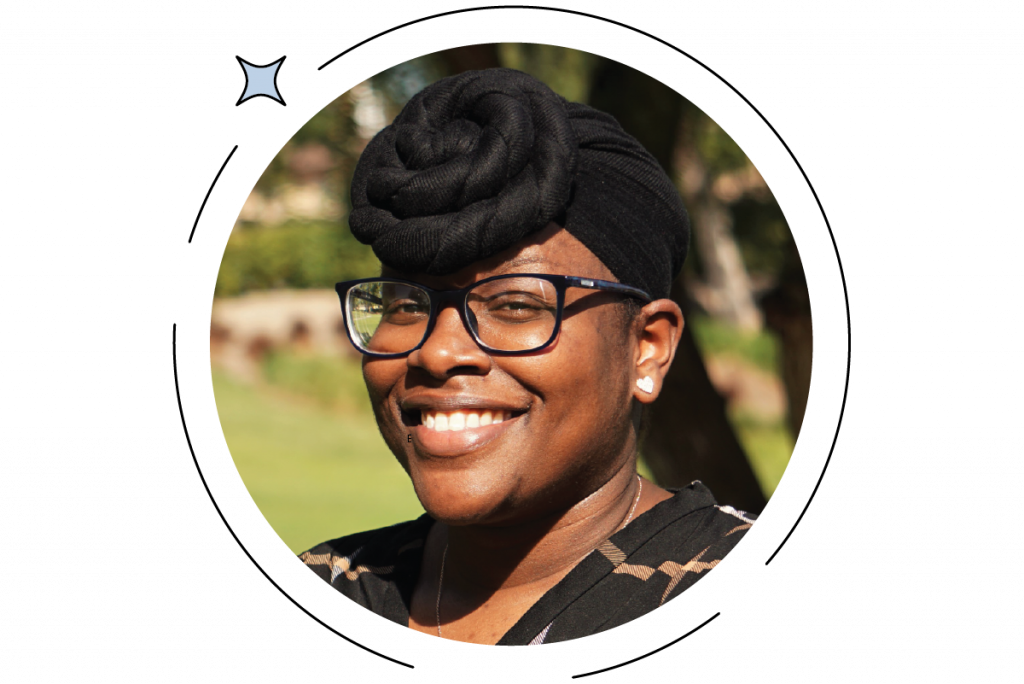
Person with glasses smiling, wearing a black headwrap and earrings, outdoors with trees and sunlight in the background.

About Science Connections

Welcome to Science Connections! Science is changing before our eyes, now more than ever. So…how do we help kids figure that out? We will bring on educators, scientists, and more to discuss the importance of high-quality science instruction. In this episode, hear from our host Eric Cross about his work engaging students as a K-8 science teacher. Listen here!

School by Design (SxD) becomes an independent company dedicated to helping education leaders design the schools their kids and teachers need

SxD will be led by Andrew Joseph, a senior executive at Amazon Education and the co-founder of TenMarks Education, Inc., a personalized online math program. Vicki Phillips, the previous K-12 Director of Education – College Ready at the Bill and Melinda Gates Foundation, will join the SxD Board of Directors, along with David Stevenson, Executive Vice President of Amplify.

SxD brings a design thinking approach to education’s annual resource planning cycle—from district budgeting to master scheduling—so that it shifts from an administrative process to a strategy for instruction. Delivered through an online platform, analytic tools, and technical assistance, SxD services include:

  • Specialized resource audits that give districts and schools a quick way to see how resource allocation and utilization are currently impacting instructional decisions related to teacher time, student time, equity, class size, and more.
  • Scenario planning to uncover the different ways budgets and time could be used based on the school experience leaders and teachers want to provide students and the supports staff need. Examples include: looking at ways to manage class size within current budget while also finding more time for teacher professional development; and exploring school designs developed around student learning opportunities such as STEAM, problem-based learning, and community-based learning.
  • Decision-making supports for districts and schools to make informed decisions about budgeting, scheduling, and school model options so that they support, not block, high quality teaching and learning experiences.

“School by Design is tackling one of the biggest challenges for districts and schools: making sure resources and policies support teachers and students,” explains Vicki Phillips. “The SxD services and supports are invaluable to schools because they help solve, within budget, the age-old ‘pain points’ that undermine good teaching—issues such as class size, time for teacher collaboration and professional learning, and scheduling for interdisciplinary learning and student field experiences.”

School by Design is built around the leading work of Marilyn Crawford on resource alignment, master scheduling, and professional development in service of innovative teaching and learning. Over the past few years, School by Design has worked with dozens of districts and CMOs across the country to find thousands of hours for teacher professional development and planning, while helping schools address the unique learning needs of their students within budget.

“School by Design helps you solve problems. Most people know what their issues are, but School by Design helps them know what to do about it,” states Steve Broome, director of state development for high school and middle grades at the Southern Regional Education Board (SREB). Working with education leaders, Steve and the team at SREB use the SxD audit and scenario planning to help schools turn their High Schools that Work principles—such as multiple pathways to college and careers—into reality.

The SxD spinoff enables Amplify to focus on its core offerings of digitally-enabled instruction, assessment, and professional development for K-5 reading and language arts and middle school ELA, math, and science. As Amplify’s and SxD’s services and products are distinct but complementary, the organizations expect to collaborate to serve districts and schools.

“I’m honored to be leading School by Design to the next level,” says Andrew Joseph. “We are uniquely positioned in this too-often ignored space where resources meet instruction. Our platform and services have helped a number of districts and schools solve their resource allocation and scheduling challenges and uncover the possibilities for their schools. We’re excited to now help other educators create the conditions in which teaching and learning can thrive.”

As an independent company, School by Design will be better able to respond to the evolving needs of educators and expand its suite of products and services. Through actionable analytics, virtual experiences, and new school models, SxD will further its position as the leader of education design thinking—helping school leaders leverage data, see all of the opportunities for engaging, high quality schooling within their resources, and make informed decisions for the types of schools their teachers, parents, and students want and deserve.

Contact: media@amplify.com

Math that motivates: Amplify Desmos Math success stories

It’s no secret that student engagement and the prevalence of math anxiety are real problems in math classrooms. Incorporating more problem-based learning can help, but it can feel intimidating and difficult to know where to start. That’s why we’re here!

Amplify Desmos Math is a curiosity-driven K–12 math program that introduces a structured approach to problem-based learning and builds students’ lifelong math proficiency. Teachers help students build off of each other’s ideas and find confidence in their math identities, creating a community of math learners.

But don’t take our word for it—see how real teachers and students are unlocking new levels of engagement and comprehension, proving that everyone can be a math person.

A woman with straight, shoulder-length blonde hair smiles at the camera, wearing a striped sweater and hoop earrings. Shelves with books are visible in the background.
“With Amplify Desmos Math, I’ve noticed a huge shift of engagement because there’s so much interaction. Yes, there is pencil and paper, but there’s so much more. They’re getting immediate feedback and motivation to continue on. So if they don’t get something right the first time, they want to! ”

—Kristi Melick

Sixth-grade teacher, San Diego Unified School District, CA

School spotlight: Decatur Classical Elementary School

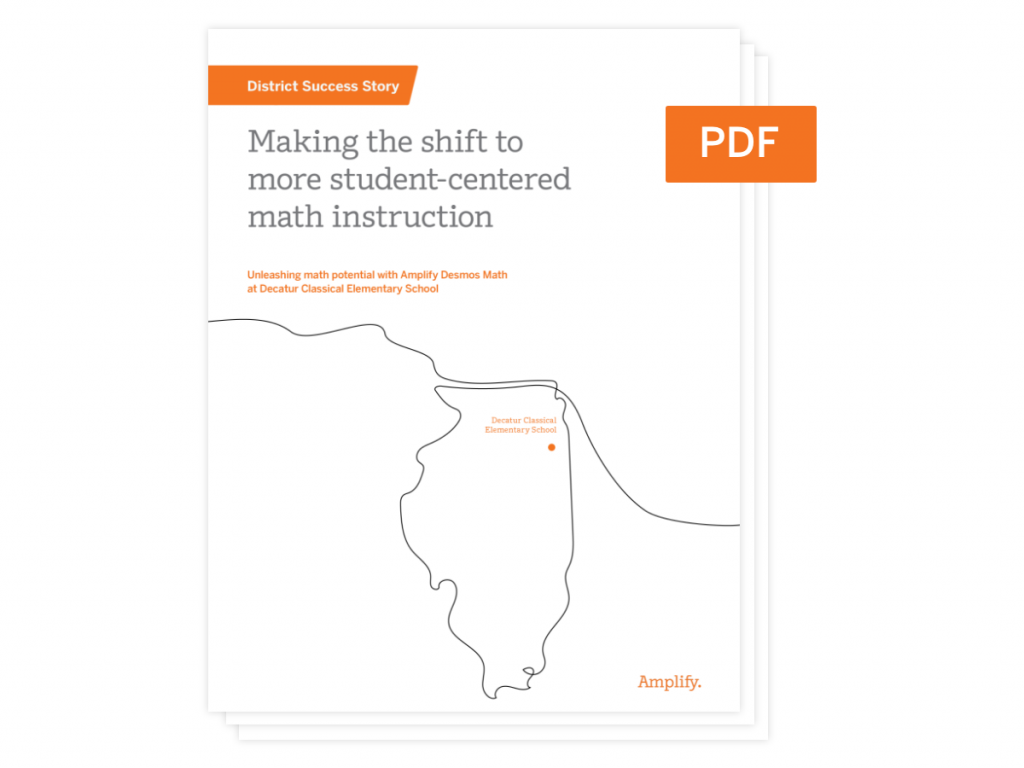
See how Amplify Desmos Math is making an impact in Chicago, Illinois, with our latest case study.

Cover page of a PDF titled "Making the shift to more student-centered math instruction," featuring an outline of Illinois and text about Decatur Classical Elementary School.

A structured approach to problem-based learning

Witness teachers and students working together and see how Amplify Desmos Math revolutionizes K–12 math education through a structured approach to problem-based learning that fosters a collaborative math community.

The power of the pause

See what happens when teachers use the pause–one of the teacher facilitation tools and core differentiators in Amplify Desmos Math. You won’t believe how students react!

Everyone’s a math person.

See how Amplify Desmos Math helps every student see themselves as a math person.

What Teachers Say

What educators say about Amplify Desmos Math

Shifting to this problem-based curriculum now is allowing students to open up. I think they’re taking control and ownership. They’re coming up with the strategies, they’re sharing the strategies. It offers an opportunity for the students to look around the classroom to see what their friends are doing. And in turn, if they’re stuck, they’re comfortable turning to other students and problem-solving through sharing.

Joseph Croce

Seaford School District, DE

What educators say about Amplify Desmos Math

When we went district-wide with our Amplify Desmos Math curriculum our teachers became the facilitators of learning. And our students are the doers of mathematics. And what we’ve seen, what I’ve seen in the classroom, is kids are engaged in a problem, they’re collaborative, and they’re having fun. And it’s like they’re not even realizing that they’re really doing math.

Jessica Walsh

San Diego Unified School District, CA

What educators say about Amplify Desmos Math

So many kids have stated, ‘Oh, I’m not a math person.’ Or they’re scared of getting the answer incorrect. And I think with this curriculum, they feel safe.

Brendan Simon

Assistant Principal, San Diego Unified School District, CA

Best practices from real educators like you

Learn tried and true strategies for leveling up math instruction from Beyond My Years podcast guests like Amplify’s own Dan Meyer, teacher and My Kindergarten Math Workbook author Keri Brown, educator and speaker Mike Flynn, teacher and I Hate Math author Ian Brown, and more!

Two women work together at a desk with a laptop and papers; the image appears on the cover of a document titled “Foundational research” for Amplify Desmos Math Grades K–Al.

Program efficacy

Explore the research behind Amplify Desmos Math.

Ready to make the shift to curiosity-driven learning?

Get access to free digital samples today.

Request a sample or demo

CKLA – Knowledge Research Units for K–5

To view this protected page, enter the password below:


Introducing new units for Amplify CKLA and Amplify Caminos K–5

As part of our commitment to creating even richer and more wide-ranging curricula, we are excited to release six new units for both Amplify CKLA and Amplify Caminos!

Click here to learn more about Amplify CKLA.

Click here to learn more about Amplify Caminos.

About these units

Our brand-new Knowledge Research units carry forward the powerful and proven instructional approach of both Amplify CKLA and Amplify Caminos while also:

  • Adding more variety to engage students from many walks of life. The rich topics and highly visual components featured in these units provide students with even more “windows and mirrors” and perspectives as they work to build knowledge.
  • Adding more authentic literature. Each new research unit revolves around a collection of high-interest authentic trade books that will spark more curiosity and inspire more inquiry.
  • Adding more flexibility. Units can be implemented for extended core instruction during flex periods, district-designated Pausing Points, or enrichment periods.

Units cover a variety of rich and relevant topics:

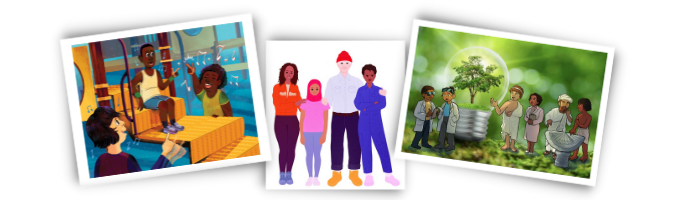
Three illustrations: one shows people at a gaming session, the middle depicts a diverse group standing together, and the third portrays a group gardening outdoors.

With these new units, students will soar to new heights with Dr. Ellen Ochoa, Amelia Earhart, and the Tuskegee Airmen. They’ll feel the rhythm as they learn about Jazz legends Miles Davis, Tito Puente, and Duke Ellington. And they’ll explore the far reaches of the world with Jacques Cousteau, Matthew Henson, and Eugenie Clark.

  • Grade K: Art and the World Around Us/El arte y el mundo que nos rodea
  • Grade 1: Adventure Stories: Tales from the Edge of the World/Cuentos de aventuras: relatos desde los confines de la Tierra
  • Grade 2: Up, Up, and Away: The Age of Aviation/¡A volar! La era de la aviación
  • Grade 3: All That Jazz/Jazz y más
  • Grade 4: Energy: Past, Present, and Future/Energía: pasado, presente y futuro
  • Grade 5: Beyond Juneteenth: 1865 to present/Más allá de Juneteenth: de 1865 al presente

Units are available in English and Spanish, and will include the following components:

  • Teacher Guide
  • Student Activity Books
  • Image Cards
  • Trade Book Collection
  • Digital Components (grades K–3 and 5)

Grade K: Art and the World Around Us/El arte y el mundo que nos rodea

“Every child is an artist,” said Picasso, meaning that every child uses art to explore and understand the world around them. Art and the World Around Us honors that truth by introducing Kindergarten students to some of the ways in which artists have explored and understood the worlds around them, too.

This domain introduces students to artists from different time periods, countries, and cultures. Throughout the unit, students learn about different kinds of art and how artists use the world around them as they make art. They also connect this to what they have already learned about the earth, plants, and animals in other Amplify CKLA and Amplify Caminos domains: Farms/Granjas, Plants/Plantas, and Taking Care of the Earth/Cuidar el planeta Tierra. In addition, students connect this to what they have learned about sculptors in the Presidents and American Symbols/Presidentes y símbolos de los Estados Unidos domain. As they explore different artists and artistic traditions, they develop their ideas about how humans are connected to each other and to the world around them.

As you read the texts in this unit, students may observe ways in which the characters or subjects are both similar to and different from students. This is a good opportunity to teach students awareness and sensitivity, building on the idea that all people share some things in common, and have other things that make them unique. This unit also offers an excellent opportunity to collaborate with your school’s art teacher, as many lessons have suggested activities to help students understand the kind of art they are studying.

Within this unit, students have opportunities to:

  • Use details to describe art.
  • Identify three ways to create art.
  • Identify characteristics of cave art.
  • Sequence the steps of making pottery.
  • Describe how artists can create work connected to the world around them.
  • Describe what makes Kehinde Wiley’s portraits unique.
  • Explain how the texture of a surface can affect artwork created on it.
  • Explain what a sculpture is.
  • Describe what makes James Turrell’s artwork about the sky unique.
  • Explain what a museum is and what kinds of things you can see or do there.

Instruction in this unit revolves around the following collection of high-interest authentic trade books. One copy of each trade book is included with the unit materials.

  • The First Drawing by Mordicai Gerstein
  • Van Gogh and the Sunflowers by Laurence Anholt
  • My Name is Georgia by Jeanette Winter
  • A Life Made by Hand by Andrea D’Aquino
  • Rainbow Weaver by Linda Elovitz Marshall
  • Luna Loves Art by Joseph Coelho

Grade 1: Adventure Stories: Tales from the Edge of the World/Cuentos de aventuras: relatos desde los confines de la Tierra

This domain introduces students to adventure stories set around the world and challenges students to dig into the adventures through research. By listening to the Read-Alouds and trade books, students increase their vocabulary and reading comprehension skills, learn valuable lessons about perseverance and teamwork, and become familiar with gathering information for research.

In this unit, students study the careers of real-world explorers Dr. Eugenie Clark and Sophia Danenberg, marvel at the inventions of Jacques Cousteau, think critically about how teamwork and collaboration can make greater adventures possible, learn about the science and technology that enable adventures, and research some of the ways humans have confronted challenges at the edges of the world, from the oceans below to space above.

Each lesson in the domain builds students’ research skills as they ask questions, gather information, and write a paragraph about their findings. Students share what they have learned about adventures in an Adventure Gallery Walkthrough. By taking on the persona of one of the adventurers they meet in the Read-Alouds and trade books, students deliver their final paragraphs as if they are a “speaking portrait” of that person. Students are invited to dress up as that adventurer if they desire.

In addition, teachers can set aside time outside of the instructional block to create the picture frames students will hold as they present to the Adventure Gallery Walk guests. Frames can be made from shirt boxes, cardboard, construction paper, or any art supplies that are on hand. This might be an opportunity to collaborate with the school’s art department if resources are available. Another option is to ask students to make their frames at home with their caregivers. On the day of the Adventure Gallery Walk, students will be the hosts and take on specific jobs, such as welcoming the guests, describing their work throughout the unit, and pointing out the areas of study on the domain bulletin board. You can find a complete list of student jobs in Lesson 13.

This unit builds upon the following Amplify CKLA and Amplify Caminos units that students will have encountered in the previous grade.

  • Nursery Rhymes and Fables/Rimas y fábulas infantiles (Kindergarten)
  • Stories/Cuentos (Kindergarten)

The specific core content targeted in these domains is particularly relevant to the Read-Alouds students will hear in Adventure Stories: Tales from the Edge of the World. The background knowledge students bring to this unit will greatly enhance their understanding of the trade books used in this unit.

Instruction in this unit revolves around the following collection of high-interest authentic trade books. One copy of each trade book is included with the unit materials.

  • My Name is Gabito/Me llamo Gabito by Monica Brown
  • Tomas and the Galápagos Adventure by Carolyn Lunn
  • The Astronaut with a Song for the Stars: The Story of Dr. Ellen Ochoa by Julia Finley Mosca
  • Mae Among the Stars by Roda Ahmed
  • Shark Lady: The True Story of How Eugenie Clark Became the Ocean’s Most Fearless Scientist by Jess Keating
  • Manfish by Jennifer Berne
  • Keep On! The Story of Matthew Henson, Co-Discoverer of the North Pole by Deborah Hopkinson
  • The Top of the World: Climbing Mount Everest by Steve Jenkins

Grade 2: Up, Up, and Away: The Age of Aviation/¡A volar! La era de la aviación

With this domain, students head up, up, and away with an introduction to the soaring history of aviation. Students learn the stories of early aviators, such as the Montgolfier brothers, the Wright brothers, Aída de Acosta, and Amelia Earhart.

During the unit, students study the science of flight, including the physics concept of lift, and research the social impacts of the world of flight. Finally, students let their research skills take flight as they explore key figures from the world of aviation.

The lessons in this domain build on earlier Grade 2 CKLA and Amplify Caminos domains about the westward expansion, early Greek civilizations, and Greek myths, and lay the foundation for learning about other periods of world history in future grades.

This unit builds upon the following Amplify CKLA and Amplify Caminos units that students will have encountered earlier in the year.

  • The Ancient Greek Civilization/La civilización griega antigua (Grade 2)
  • Greek Myths/Mitos griegos (Grade 2)
  • Westward Expansion/La expansión hacia el oeste (Grade 2)

The specific core content targeted in these domains is particularly relevant to the Read-Alouds students will hear in Up, Up, and Away: The Age of Aviation. The background knowledge students bring to this unit will greatly enhance their understanding of the trade books used in this unit.

Instruction in this unit revolves around the following collection of high-interest authentic trade books. One copy of each trade book is included with the unit materials.

  • Up and Away!: How Two Brothers Invented the Hot-Air Balloon by Jason Henry
  • The Glorious Flight: Across the Channel with Louis Blériot by Alice and Martin Provensen
  • The Flying Girl: How Aída de Acosta Learned to Soar by Margarita Engle
  • Wood, Wire, Wings: Emma Lilian Todd Invents an Airplane by Kirsten Larson
  • Helicopter Man: Igor Sikorsky and His Amazing Invention by Edwin Brit Wyckoff
  • The Tuskegee Airmen Story by Lynn Homan and Thomas Reilly
  • Skyward: The Story of Female Pilots in WWII by Sally Deng
  • Aim for the Skies: Jerrie Mock and Joan Merriam Smith’s Race to Complete Amelia Earhart’s Quest by Aimee Bissonette

Grade 3: All That Jazz/Jazz y más

This domain teaches students about the vibrant music, poetry, and culture of the Jazz Age in the United States. Students learn about famous writers and musicians like Langston Hughes, Louis Armstrong, Billie Holiday, Melba Liston, Tito Puente, and Miles Davis. They study how the jazz art form took root in the South, then spread to the North to become the sound of the Harlem Renaissance, eventually connecting people around the world in musical expression.

During this unit, students perform guided research to further explore both the history of jazz and what jazz is today. They develop research skills and then use those skills to find deeper connections between the stories and music of the Jazz Age and music today. As students learn about the world of jazz, they collaborate and share ideas with their classmates. They also practice sharing feedback focused on their written work, and, at the end of the unit, students present their research to the group.

The lessons give students opportunities to dive into the rhythms and stories of jazz, utilizing the knowledge sequence in this unit to:

  • Collaboratively generate research questions about jazz, jazz musicians, contemporary musicians from the state where they live or have lived, and the evolution of jazz music.
  • Utilize Read-Alouds, independent reading, and partner reading to learn about the Jazz Age, the Harlem Renaissance, jazz music, and biographies of celebrated jazz musicians and writers.
  • Research the answers to their generated questions, gather information, write a short research essay about a famous jazz musician, write a short essay about a contemporary musician from the state where they live or have lived, and give a presentation about their research.

Within this unit, students have opportunities to:

  • Ask relevant questions and make pertinent comments
  • Identify details in texts
  • Determine key ideas of texts by evaluating details
  • Make text-based inferences
  • Generate questions based on prior knowledge and gathered information
  • Synthesize details across texts to demonstrate comprehension
  • Discuss and explain an author’s purpose
  • Identify and cite reliable primary and secondary sources of information
  • Compose a well-organized and focused informative essay
  • Make connections between topics
  • Present information using appropriate media

Instruction in this unit revolves around the following collection of high-interest authentic trade books. One copy of each trade book is included with the unit materials.

  • Birth of the Cool: How Jazz Great Miles Davis Found His Sound by Kathleen Cornell Berman
  • Little Melba and Her Big Trombone by Kathryn Russell-Brown
  • Benny Goodman and Teddy Wilson: Taking the Stage as the First Black and White Jazz Band in History by Lesa Cline-Ransome
  • Tito Puente, Mambo King by Monica Brown
  • Drum Dream Girl: How One Girl’s Courage Changed Music by Margarita Engle
  • Duke Ellington: The Piano Prince and His Orchestra by Andrea Pinkney

In this unit, students also read the poem “Harlem” by Langston Hughes. (Available for free through the Academy of American Poets website and the Poetry Foundation website, with recorded audio available through the website for John Hancock College Preparatory High School.)

Grade 4: Energy: Past, Present, and Future/Energía: pasado, presente y futuro

With this domain, students become tomorrow’s problem solvers in this study of energy in the United States. Analytical reading skills are developed by examining the challenges of early energy innovators. Students then read about current energy practices and young energy change-makers across the world.

Throughout the unit, students conduct research into different sources of energy and present a proposal, putting them in the shoes of future energy innovators. They also use the knowledge sequence in this unit to:

  • Collaboratively analyze texts to identify cause-effect and problem-solution relationships.
  • Generate questions and conduct research about energy.
  • Write an opinion essay making their case for a fuel of the future.
  • Create energy proposals using primary and secondary resources.

This unit builds upon the following Amplify CKLA units that students will have encountered in previous grades as well as earlier in the year.

  • Plants/Plantas (Grade K)
  • The History of the Earth/La historia de la Tierra (Grade 1)
  • Eureka! Student Inventor/¡Eureka! El arte de la invención (Grade 4)

The specific core content targeted in these domains is particularly relevant to the Read-Alouds students will hear in Energy: Past, Present, and Future. The background knowledge students bring to this unit will greatly enhance their understanding of the trade books used in this unit.

Instruction in this unit revolves around the following collection of high-interest authentic trade books. One copy of each trade book is included with the unit materials.

  • Buried Sunlight: How Fossil Fuels Have Changed the Earth by Molly Bang and Penny Chisholm
  • Energy Island: How One Community Harnessed the Wind and Changed their World by Allan Drummond
  • The Boy Who Harnessed the Wind: Picture Book Edition by William Kamkwamba and Bryan Mealer

Grade 5: Beyond Juneteenth: 1865 to present/Más allá de Juneteenth: de 1865 al presente

Within this domain, Students learn about General Granger’s announcement in Galveston, Texas on June 19, 1865, a day marked in history as Juneteenth. Texts and multimedia sources will support foundational knowledge-building about the end of slavery in the United States. A review of the first freedom announcement, President Lincoln’s Emancipation Proclamation, provides students with background knowledge to further emphasize the significance of Juneteenth in American history.

This unit also takes students on a journey beyond Juneteenth, as they study specific contributions of African Americans from 1865 to the present day. Students participate in a virtual field trip to Emancipation Park in Houston, Texas and use the knowledge sequence in this unit to:

  • Collaboratively generate research questions about Juneteenth, The Great Migration, innovators and inventors, education, the humanities, activists, and allies.
  • Use Read-Alouds, independent, and partner reading to learn about African American contributions from 1865 to the present.
  • Research to find answers to their generated questions, gather information, and write a four-chapter Beyond Juneteenth book.

This unit builds upon the following Amplify CKLA units that students will have encountered in previous grades.

  • Native Americans/Los nativos americanos (Grade K)
  • A New Nation: American Independence/Una nueva nación: la independencia de los Estados Unidos
    (Grade 1)
  • The U.S. Civil War/La Guerra Civil de los Estados Unidos (Grade 2)
  • Immigration/La inmigración (Grade 2)
  • Native Americans/Los nativos americanos (Grade 5)

The specific core content targeted in these domains is particularly relevant to the Read-Alouds students will hear in Beyond Juneteenth: 1865 to present. The background knowledge students bring to this unit will greatly enhance their understanding of the trade books used in this unit.

Instruction in this unit revolves around the following collection of high-interest authentic trade books. One copy of each trade book is included with the unit materials.

  • All Different Now: Juneteenth, the First Day of Freedom by Angela Johnson
  • The Great Migration: An American Story by Jacob Lawrence
  • Sing a Song: How “Lift Every Voice and Sing” Inspired Generations by Kelly Starling Lyons
  • Side by Side/ Lado a lado: The Story of Dolores Huerta and Cesar Chavez/ La Historia de Dolores Huerta y Cesar Chavez by Monica Brown
  • Of Thee I Sing: A Letter to My Daughters by Barack Obama

Amplify CKLA Review for Alabama

To view this protected page, enter the password below:


Literacy Essentials, Episode 4

Science of Reading Essentials: The science of learning

On this Science of Reading Essentials episode, we're taking a deeper dive into the science of learning to explore how memory, cognitive load, and knowledge building can transform your literacy instruction. On this synthesis episode, host Susan Lambert, Ed.D., weaves in the insights of our expert guests—Natalie Wexler; Nathaniel Swain, Ph.D.; Hugh Catts, Ph.D.; Daniel Willingham, Ph.D.; Peter C. Brown; Jamey Peavler, Ed.D.; and David Rapp, Ph.D. With their insights, Susan reflects on how memory works and why understanding its processes is foundational to effective teaching; why cognitive load theory and background knowledge are game-changers for literacy instruction; and which evidence-based strategies—like retrieval practice, spaced repetition, and mixed practice—make learning stick.

Meet Our Guest(s):

Portrait of a woman with short, curly blonde hair, light skin, and a white top, looking at the camera with a neutral expression—an image that could illustrate modern perspectives in literacy instruction or the science of learning.

Natalie Wexler

Natalie Wexler is the author of multiple books, including Beyond the Science of Reading: Connecting Literacy Instruction to the Science of Learning and The Knowledge Gap: The Hidden Cause of America’s Broken Education System—and How to Fix It; and is the co-author, together with Judith C. Hochman, Ed.D., of The Writing Revolution: A Guide to Advancing Thinking Through Writing in All Subjects and Grades. She has a free Substack newsletter called Minding the Gap, and she was the host of the Knowledge Comprehension podcast, Season 1. More information is available on her website, www.nataliewexler.com.

A man with short brown hair and a beard, wearing a light blue collared shirt, poses in front of a blurred background, reflecting his passion for reading comprehension and literacy instruction.

Nathaniel Swain, Ph.D.

Nathaniel Swain is a teacher, instructional coach, and writer. He produces a blog for teachers called Dr. Swain’s Cognitorium and is cohost of the Chalk Dust podcast with Rebecca Birch. Nathaniel works directly with schools and systems through an online learning platform called Luminary.

He founded a community of educators committed to the science of learning, called Think Forward Educators. He also has a best-selling book, Harnessing the Science of Learning: Success Stories to Help Kickstart Your School Improvement.

A bald older man with a white goatee and mustache, wearing a dark collared shirt, smiles at the camera against a plain gray background—exuding warmth often found in dedicated literacy instruction professionals.

Hugh Catts, Ph.D.

Hugh Catts’ research interests include the early identification and prevention of reading and disabilities. He is a former board member of the International Dyslexia Association and former president of the Society for the Scientific Study of Reading. He has received the Samuel T. Orton Award, the International Dyslexia Association’s highest honor, and the Honors of the Association award from the American Speech-Language-Hearing Association, for his career contributions in these disciplines. His current research concerns the early identification of reading and language difficulties and the nature and assessment of reading comprehension problems.

A bald man with red-framed glasses and a brown jacket stands in front of a brick wall, embodying the spirit of literacy instruction as he looks at the camera.

Daniel Willingham, Ph.D.

Daniel Willingham is a professor of psychology at the University of Virginia, where he has taught since 1992. Until about 2000, his research focused solely on the brain basis of learning and memory. Today, all of his research concerns the application of cognitive psychology to K–12 education. He is the author of several books, including the best-selling Why Don’t Students Like School? and Outsmart Your Brain. His writing on education has appeared in 23 languages. In 2017, he was appointed by President Barack Obama to the National Board for Education Sciences.

An older man with white hair and a beard, wearing a blue checked shirt, stands outdoors near a body of water with trees in the background, perhaps reflecting on reading comprehension or the science of learning.

Peter C. Brown

Peter C. Brown is a bestselling writer and novelist, retired from a career as a management consultant. He is the lead author of Make It Stick: The Science of Successful Learning. Make It Stick has been translated into 17 foreign languages and received international acclaim for changing the way we understand learning.

Jamey Peavler, Ed.D.

Jamey Peavler is a co-director of and full-time instructor in the Graduate Reading Science program at Mount St. Joseph University. Before joining Mount St. Joseph, Jamey served as director of training for the M.A. Rooney Foundation. In addition, she works for the National Council for Teacher Quality (NCTQ) as a higher-education textbook and teacher licensure reviewer. Her research interests include instructional design, the impact of spaced practice and interleaving to support effortful retrieval and retention of information, the role of oral language and syntactic awareness on comprehension and written expression, and foundational skills for supporting literacy in the early childhood setting.

A woman with long brown hair is smiling at the camera, surrounded by books and plants blurred in the background—a perfect scene for anyone passionate about reading comprehension and the science of learning.
A man with short gray hair, a beard, and glasses, known for his work in literacy instruction, is wearing a purple checkered shirt and smiling slightly against a plain white background.

David Rapp, Ph.D.

David Rapp is the Walter Dill Scott Professor of Education, Social Policy, and Psychology at Northwestern University. His research examines language and memory, focusing on the cognitive mechanisms responsible for successful learning and knowledge failures. This has included investigations into the influence of inaccurate information on comprehension, the evaluation of technologies that support formal and informal learning, and the iterative development of tools and curricula intended to support literacy. Rapps’ projects have been funded by the National Science Foundation, the U.S. Department of Education, the National Institute on Aging, and Meta.

Meet our host, Susan Lambert, Ed.D.

Susan Lambert is chief academic officer of literacy at Amplify and host of Science of Reading: The Podcast. Throughout her career, she has focused on creating high-quality learning environments using evidence-based practices. Lambert is a mom of four, a grandma of four, a world traveler, and a collector of stories.

As the host of Science of Reading: The Podcast, Lambert explores the increasing body of scientific research around how reading is best taught. A former classroom teacher, administrator, and curriculum developer, she’s dedicated to turning theory into best practices that educators can put right to use in the classroom, and to showcasing national models of reading instruction excellence.

Person with short blonde hair, glasses, and earrings, wearing an orange jacket, smiling in front of a plain gray background—committed to literacy education and fostering background knowledge for all learners.

Quotes

“To build a meaningful memory of something that you can hold on to and use, you have to think about it.”

—Hugh Catts

“Memory is a cognitive process. It's the way the brain encodes, stores, and retrieves information.”

—Susan Lambert

“You can't learn something new if it doesn't connect to something you already know.”

—Peter C. Brown

“The catch about writing is it's hugely important. It can help cement knowledge and long-term memory, deep knowledge, et cetera.”

—Natalie Wexler

“When we have knowledge in our long-term memory, all of these limitations suddenly disappear.”

—Nathaniel Swain

“We can only work with a limited set of information and when there's too much happening in our working memory, we experience cognitive overload. Essentially, our system is overloaded and we shut down.”

—Susan Lambert

“Essentially, memory is what enables us to retain knowledge, skills, and experiences, forming the foundation for all learning and cognition.”

—Susan Lambert

“The resonance model of comprehension suggests when someone asks a question, lots of ideas get activated automatically in memory.”

—David Rapp

“Your mind is very good at bringing up from memory the necessary facts, the facts that will help you given the context.”

—Daniel Willingham

“A lot of our students that are having difficulty are experiencing cognitive overload. So the first thing we need to think about is how are we gonna minimize that for them?”

—Jamey Peavler

Season 7, Episode 3

When not to differentiate: A guide to small-group instruction, with Jamey Peavler

This season is all about tackling the hard stuff, and there is no harder pill to swallow than being told by a student that you don’t know how to teach reading—especially when you realize they’re right! After this happened to Jamey Peavler, co-director in the Reading Science Graduate Program at Mount St. Joseph University, she leaned in and took the opportunity to completely rethink her approach to literacy instruction. Now, her research focuses on maximizing small-group instruction. In this episode, she’ll share her findings and her advice, as well as some best practices for small-group instruction and balancing small- and whole-group work.

Meet Our Guest(s):

Profile photo of a smiling woman with long brown hair, featuring graphic elements like a white arrow, blue book icon, and the "Science of Reading Podcast" logo.

Jamey Peavler

Jamey Peavler is a co-director and full-time instructor in the Reading Science Graduate Program at Mount St. Joseph University. Before joining The Mount, Jamey served as director of training for the M.A. Rooney Foundation. In addition, she works for the National Council for Teacher Quality (NCTQ) as a higher-education textbook and teacher licensure reviewer. Jamey is a certified fellow-in-training with the Orton-Gillingham Academy and an International Dyslexia Association Structured Literacy dyslexia specialist, and currently serves on the board for the Reading League’s Indiana chapter. Her research interests include instructional design, the impact of spaced practice and interleaving to support effortful retrieval and retention of information, the role of oral language and syntactic awareness on comprehension and written expression, and foundational skills for supporting literacy in the early childhood setting.

Meet our host, Susan Lambert

Susan Lambert is the Chief Academic Officer of Elementary Humanities at Amplify, and the host of Science of Reading: The Podcast. Her career has been focused on creating high-quality learning environments using evidence-based practices. Susan is a mom of four, a grandma of four, a world traveler, and a collector of stories.

As the host of Science of Reading: The Podcast, Susan explores the increasing body of scientific research around how reading is best taught. As a former classroom teacher, administrator, and curriculum developer, Susan is dedicated to turning theory into best practices that educators can put right to use in the classroom, and to showcasing national models of reading instruction excellence.

Retrato de una mujer caucásica sonriente con cabello rubio corto, involucrada en un podcast sobre la ciencia de la lectura, con gafas, lápiz labial rojo y un collar de perlas.

Quotes

“We have this mindset of that small-group differentiated golden standard, but there's a certain amount of instruction, again, [that] all kids need and there isn't a lot of difference between those things.”

—Jamey Peavler

Summer ’24 Interlude, Episode 1

Summer ’24 Interlude: How effective coaching transformed Mississippi, with Kelly Butler and Margaret Goldberg

In this episode, Susan Lambert talks with Kelly Butler and Margaret Goldberg about their experiences and insights into improving reading instruction, particularly in Mississippi and California. Kelly discusses her work with the Barksdale Reading Institute, its impact on reading education, and the importance of coaching and structured literacy. Margaret shares her experiences as a coach in California, the challenges of teacher training, and the importance of having a clear and effective literacy plan that includes acquiring high-quality data and using it to inform all your strategies. Both guests emphasize the need for systemic change and the role of community involvement in educational success.

Meet Our Guest(s):

Kelly Butler

Kelly Butler

Kelly Butler is Senior Advisor to Reading Universe.org, a large-scale legacy project of Mississippi’s Barksdale Reading Institute (BRI), where she served as Chief Executive Officer. BRI contributed significantly to Mississippi’s rise in reading scores on the National Assessment of Educational Progress. During her tenure there, Kelly initiated the Reading Universe concept to provide high-quality professional development to educators in schools and educator preparation programs. She authored three statewide studies on Teacher Preparation for Early Literacy Instruction which propelled The Path Forward, a multi-state initiative focused on preparation and licensure. She’s an advisor to the Mississippi Reading Panel, the Mississippi Reading Clinic, The Path Forward, the Southeast Region’s Education Laboratory, and the Education Advocacy  Center, and she’s a board member for Springboard to Opportunities and Deans for Impact. She holds a master’s degree in administration, planning, and social policy from Harvard University.

Margaret Goldberg

Margaret Goldberg

Margaret Goldberg is a literacy coach at Nystrom Elementary, a California school awarded a state Early Literacy Support Block grant. With that grant, she supported a network of literacy coaches striving to improve early literacy achievement in California’s lowest performing schools. She’s held a variety of other roles, including district Early Literacy Lead, reading interventionist, and classroom teacher. Everywhere she’s worked, she’s endeavored to help schools and districts align instruction with reading research. 

Margaret is the co-founder of The Right to Read Project. Her writing has been published on The Right to Read Project blog and on Reading Rockets. She holds a master’s degree in elementary education and teaching from the University of California, Berkeley. 

Meet our host, Susan Lambert

Susan Lambert is the Chief Academic Officer of Elementary Humanities at Amplify, and the host of Science of Reading: The Podcast. Her career has been focused on creating high-quality learning environments using evidence-based practices. Lambert is a mom of four, a grandma of four, a world traveler, and a collector of stories.

As the host of Science of Reading: The Podcast, Lambert explores the increasing body of scientific research around how reading is best taught. As a former classroom teacher, administrator, and curriculum developer, Lambert is dedicated to turning theory into best practices that educators can put right to use in the classroom, and to showcasing national models of reading instruction excellence.

Retrato de una mujer caucásica sonriente con cabello rubio corto, involucrada en un podcast sobre la ciencia de la lectura, con gafas, lápiz labial rojo y un collar de perlas.

Quotes

“How did you get the buy-in from the teachers? We didn't wait for buy-in. We said, ‘We've got a law sitting here and we've got coaches that know what to do.’ … Once they tried to do it, it worked. And then there came buy-in.”

—Kelly Butler

“The laws are telling us that time's up. We need to get this job done. The good news is we know how to do it. We just need to get it done everywhere.”

—Kelly Butler

“My greatest frustration with colleges of education is that we have for centuries been colleges of philosophy, not of science. And I think we are beginning to see a shift in the profession based on science, not just on what we think or believe in.”

—Kelly Butler

“I think I used to think that it was going to be possible for a teacher to figure it out on her own. Or I thought that it would be possible for a school to figure it out on their own, or a district, or even a state. And the more that I realize… like, it's very rare that people are getting the outcomes that they actually want.”

—Margaret Goldberg

“I think we have strayed away from the idea of there being a social contract between the community and schools. And if we could get back to the point where we had an agreement about what the obligations of schools actually are, then we'd do everything differently.”

—Margaret Goldberg

Season 7, Episode 2

The Science of Reading in the Montessori classroom, with Susan Zoll, Natasha Feinberg, Laura Saylor

For the second episode in our new season focused on tackling the hard stuff, we’re taking on a question that listeners have asked: how can we apply the Science of Reading in a Montessori setting? To help explore that question, we’re joined by the three authors of the recent book Powerful Literacy in the Montessori Classroom: Aligning Reading Research and Practice. Listen to Dr. Susan Zoll, Dr. Natasha Feinberg, and Dr. Laura Saylor as they explore the shared qualities between the Science of Reading and Montessori approach. They share tips and guidance for literacy instruction both inside and outside a Montessori setting and end with an impassioned call to educators from all approaches to come together and learn from each other for the benefit of students everywhere.

Meet Our Guest(s):

Tres retratos de mujeres sonrientes dispuestos en forma triangular con un número siete escrito a mano entre las dos imágenes inferiores en un aula Montessori.

Dr. Natasha Feinberg

Natasha Feinberg, Ed.D. is an assistant professor at Rhode Island College in the elementary education department. She instructs preservice teachers in the areas of reading and writing as well as directs the Master’s of Education in Reading program. Dr. Feinberg has 17 years of experience as a reading specialist/literacy coach in the R.I. public school system. With an Ed.D. in curriculum leadership from Northeastern University, Dr. Feinberg’s area of expertise lies in the Science of Reading and teaching reading to all types of learners. She has worked extensively with Tier 2 and 3 literacy interventions identifying specific student literacy needs and matching evidence-based interventions and specific progress monitoring tools that address those needs. Her work focuses on supporting data-based individualization and data-based decision making.


Dr. Laura Saylor

Dr. Laura Saylor is dean of the school of education at Mount St. Joseph University. She earned her Ph.D. in educational studies with a concentration in educational policy and higher education with a focus in STEM education from The University of Cincinnati. Previously, she earned her Master of Education from Xavier University with a concentration  in Montessori Education.

Her 25 years of practical experience include teaching in inclusive and multi-age settings and serving as the head of school for an independent Montessori school. Laura is a frequent presenter at national conferences. Her research focuses include the importance of learning and reading science in teacher preparation as well as assessing performance of pre-service teachers in clinical experiences. Dr. Saylor’s interests also extend to best practices in educational assessment and collaborative work between P-12 and educator preparation. Her recently published research includes mathematics discourse with pre-service teachers and the effects of teacher-centered mentorship.


Dr. Susan Zoll

Susan Zoll, Ph.D., specializes in early childhood education serving in leadership roles on several U.S. Department of Education-funded early literacy initiatives (Early Reading First 2004, 2006, 2009; Early Childhood Education Professional Development grant 2006); Director of the Institute for Early Childhood Teaching and Learning (Race To The Top – Early Learning Challenge, 2014); and her current role as Associate Professor in teacher preparation coaching preservice educators at Rhode Island College.

Dr. Zoll holds a Montessori primary credential (AMS 3-6) having served as a Montessori classroom teacher, teacher trainer for the language curriculum, and a head of school. Currently, she serves as the co-chair of the American Montessori Society’s (AMS) Research Committee.

Publications include: Powerful Literacy in the Montessori Classroom: Aligning Reading Research and Practice (Teachers College Press, 2023); Designing a Logic Model to Inform Montessori Research (2019); The Montessori Experiment in Rhode Island (1913-1949): Tracing Theory to Implementation over 25 Years (2017); Towards Social Justice: A Needs Assessment of Early Childhood Development In South Africa (2013); From “at risk” to “at promise”: An Evaluation of an Early Reading First Project (2012); and Sustainable Practices in Mentoring: Tools to Support Child Outcomes and a Mentoring Protocol (2011). Her work in the development of an assessment protocol has been recognized by the U.S. Department of Education’s Doing What Works initiative.

Meet our host, Susan Lambert

Susan Lambert is the Chief Academic Officer of Elementary Humanities at Amplify, and the host of Science of Reading: The Podcast. Her career has been focused on creating high-quality learning environments using evidence-based practices. Susan is a mom of four, a grandma of four, a world traveler, and a collector of stories.

As the host of Science of Reading: The Podcast, Susan explores the increasing body of scientific research around how reading is best taught. As a former classroom teacher, administrator, and curriculum developer, Susan is dedicated to turning theory into best practices that educators can put right to use in the classroom, and to showcasing national models of reading instruction excellence.

Retrato de una mujer caucásica sonriente con cabello rubio corto, involucrada en un podcast sobre la ciencia de la lectura, con gafas, lápiz labial rojo y un collar de perlas.

Quotes

“Maria Montessori was a scientist first. She developed her methods based on science.”

— Laura Saylor

“Reading is the human rights issue of our era in education and we want all children to be successful.”

—Susan Zoll

“I encourage everyone, get together with your colleagues, talk about the different pedagogy, talk about the different strategies that are out there, because that is what is going to help us become better in the field of education.”

—Natasha Feinberg

Season 9, Special Episode

A better way to teach our teachers, with Karen Betz, Ed.D.

In this special episode of Science of Reading: The Podcast, Susan Lambert is joined by Assistant Professor of Literacy and Coordinator of Reading Science Programs at Marian University Karen Betz, Ed.D., to discuss a key topic in the Science of Reading movement: higher education. Betz describes how we can better prepare new teachers to provide evidence-based instruction, and her tool to help teachers in higher education assess whether their courses align to reading research. Betz also offers advice for current practitioners on how they can support change at the university level.

Meet Our Guest(s):

A woman with shoulder-length brown hair and glasses, wearing a dark blazer, smiles in front of a light background. Illustrated icons of a light bulb and lines are overlaid, evoking the spirit of the science of reading podcast.

Karen Betz, Ed.D.

Karen Betz, Ed.D., is an assistant professor of literacy and coordinator of reading science programs for Klipsch Educators College at Marian University in Indianapolis, Indiana. Betz launched the school’s Master of Science in reading science, which was the first of its kind developed in Indiana. She founded KB Literacy Consulting, which supports public, charter, and private schools in developing systems to ensure all children receive effective reading and writing instruction, and serves as developer and trainer of the Higher Education Community of Practice course for The Literacy Architects, an organization that supports instructors in aligning coursework to reading research. Betz’s research focuses on her passion for providing and helping others develop effective teacher preparation for pre-service and in-service teachers in the Science of Reading. A graduate of the University of Cincinnati with a Bachelor of Arts in psychology, Bachelor of Science in elementary education, Master of Science in elementary education, and an endorsement in gifted education, Betz also holds a doctorate in reading science from Mount St. Joseph University.

Meet our host, Susan Lambert

Susan Lambert is the Chief Academic Officer of Elementary Humanities at Amplify, and the host of Science of Reading: The Podcast. Throughout her career, she has focused on creating high-quality learning environments using evidence-based practices. Lambert is a mom of four, a grandma of four, a world traveler, and a collector of stories.

As the host of Science of Reading: The Podcast, Lambert explores the increasing body of scientific research around how reading is best taught. As a former classroom teacher, administrator, and curriculum developer, Lambert is dedicated to turning theory into best practices that educators can put right to use in the classroom, and to showcasing national models of reading instruction excellence.

Person with short blonde hair, glasses, and earrings, wearing an orange jacket, smiling in front of a plain gray background—committed to literacy education and fostering background knowledge for all learners.

Quotes

“The reality is, many of our pre-service teachers are entering the classroom not prepared and they don't know that they're not prepared.”

— Karen Betz

“It has taken legislation and I don't think that's a bad thing. We need to have some people invested in understanding what the issue is. We've got to stop the bleeding in higher education in order to really make gains.”

— Karen Betz

“We're not working against each other. We're not in competition. We're all trying to ensure that all pre-service teachers, when they leave the university or the program, that they're prepared. And it ultimately always is going to come down to the children, and we can never lose sight of that. It's about the kids.”

— Karen Betz

“Don't be afraid to say ‘I don't know.’ I think people respect that, that you say, ‘I just don't know’ and ‘how can you help me learn more?’”

— Karen Betz

Amplify Science Named SIIA Education Technology 2019 CODiE Award Finalist for Best Emerging Instructional Technology Solution

Brooklyn, NY (May 7, 2019) Amplify, a publisher of next-generation curriculum and assessment programs, today announced that Amplify Science has been named a 2019 SIIA CODiE Award finalist in the Best Emerging Instructional Technology Solution category. Award finalists represent applications, products and services from developers of educational software, digital content, online learning services and related technologies across the PreK–20 sector.

Amplify Science is a breakthrough K–8 curriculum designed from the ground up for the Next Generation Science Standards by the curriculum experts at the University of California, Berkeley’s Lawrence Hall of Science. In each Amplify Science unit, students inhabit the role of a scientist or engineer to investigate a real-world problem, using relevant, 21st-century contexts to investigate scientific phenomena. Educators who adopt Amplify Science receive a comprehensive curriculum that includes literacy-rich activities, hands-on investigations, digital simulations, embedded assessments, and robust teacher supports.

“We are honored that SIIA recognized the strength of Amplify Science and named us as a finalist in the CODiE awards,” said Steven Zavari, senior vice president and general manager, science curriculum, at Amplify. “We are excited to share this news about our innovative program with educators across the country.”

The SIIA CODiE Awards are the premier awards for the software and information industries and have recognized product excellence for more than 30 years. The awards have 76 categories that are organized by industry focus of education technology and business technology. Amplify Science was honored as one of 139 finalists across the 32 education technology categories.

“The 2019 CODIE Award finalists represent the finest in innovation and creativity in educational technology,” said President Jeff Joseph at SIIA. “These breakthrough products are opening doors for learners of all ages by developing and utilizing new technologies to respond to diverse student and educator needs.”

The SIIA CODiE Awards are the industry’s only peer-reviewed awards program. Educators and administrators serve as judges and conduct the first-round review of all education nominees. Their scores determine the SIIA CODiE Award finalists, and SIIA members then vote on the finalist products. The scores from both rounds are tabulated to select the winners.

Winners will be announced during a CODiE Award Celebration at the Ed Tech Industry Conference & CODiE Awards in San Francisco on June 11.

Details about each finalist are listed at https://www.siia.net/codie/2019-Finalists

About Amplify

A pioneer in K–12 education since 2000, Amplify is leading the way in next-generation curriculum and assessment. Our captivating core and supplemental programs in ELA, math, and science engage all students in rigorous learning and inspire them to think deeply, creatively, and for themselves. Our formative assessment products turn data into practical instructional support to help all students build a strong foundation in early reading and math. All of our programs provide teachers with powerful tools that help them understand and respond to the needs of every student. Today, Amplify serves five million students in all 50 states. For more information, visit amplify.com.

About the SIIA CODiE™ Awards

The SIIA CODiE Awards is the only peer-reviewed program to showcase business and education technology’s finest products and services. Since 1986, thousands of products, services and solutions have been recognized for achieving excellence. For more information, visit siia.net/CODiE.

About Software and Information Industry Association (SIIA)

SIIA is an umbrella association representing 800+ technology, data and media companies globally. Industry leaders work through SIIA’s divisions to address issues and challenges that impact their industry segments with the goal of driving innovation and growth for the industry and each member company.  This is accomplished through in-person and online business development opportunities, peer networking, corporate education, intellectual property protection and government relations. For more information, visit siia.net.

###